
Airplane white noise, a 1-hour night flight
A full hour in a window seat on a calm overnight flight: moonlit cloud below, a wing light blinking slowly, and the deep, even roar of the cabin carrying you along. No announcements, no seatbelt chimes, no bumps.
Watch on YouTube · SleepBetter channel · Nature & Night Sky
Made with AI. Parts of this video are AI-generated (see “How this was made” below).
What it is
The same night flight as our 45-minute cabin, stretched to a full hour. Out of the window a full moon hangs over a sea of cloud and the wingtip light pulses softly. The sound is a jet at cruise: a broad, airy rush, a low engine hum underneath and a warm noise floor. The chapters are simple: night flight above the clouds (0:00), the screen begins to dim (3:00), dark screen with the sound carrying on (10:00), halfway (30:00) and a gentle fade-out from 59:00, so it never stops dead.
How to use it for sleep
An hour covers the time most people take to fall asleep with plenty to spare, so it suits nights when you lie awake for a while before you drift off. Start it low, about the level of a quiet conversation or below, and let your ears settle for a minute; our safe volume guide has easy ways to check. Because the screen is near-black from 10:00, it works on a bedroom TV without lighting up the room, or you can play it on a phone with the screen off.
If you want to know how long you have before your alarm, the sleep calculator works backwards from your wake-up time. For a twenty-second taste of this cabin to save for later, see the night flight cabin hum Short.
Which length to pick
Choose the 45-minute flight for a long afternoon rest or a focused block of reading, and this hour for falling asleep at night with the room going quiet afterwards. If you tend to wake in the early hours and want sound all night, an 8-hour noise such as deep sleep brown noise is the better choice. If you like a gentle rhythm with your noise, night train rain swaps the jet for the soft clack of the rails.
Best for
People who always nod off on planes, anyone who likes white or brown noise but finds it too flat, and covering steady background sound such as traffic, a fan or a neighbour’s TV. Our white noise guide explains how a steady sound like this masks the noises that wake you.
Sound design note
This is not a recording from a real flight. SleepBetter’s own sound engine shapes broadband noise into the rush of cabin air, adds a faint low hum like distant engines and keeps the level steady over a brown-noise floor. Nothing loops, so the mix never repeats in a pattern you can learn. We left out every chime, announcement and bump on purpose, because those are the sounds that wake people on a real plane.
How this was made
This video’s picture is AI-generated: an AI still image of the window view, gently animated with an AI video model, with slow moving light and a softly blinking wing light added by SleepBetter, looped and colour-graded. Audio: jet cabin roar, low engine hum and a brown-noise floor generated by SleepBetter’s own sound engine (no samples, no loops). No voice.
Questions
How is this different from the 45-minute version?
Same cabin, same sound, just longer: the hour gives you more time to fall asleep, and the fade-out starts at 59:00 instead of 44:00.
Are there announcements or seatbelt chimes?
No. It is only the steady sound of the cabin, with no chimes, announcements or turbulence.
When does the screen go dark?
The picture starts to dim at 3:00 and is near-black from 10:00.
Keep watching
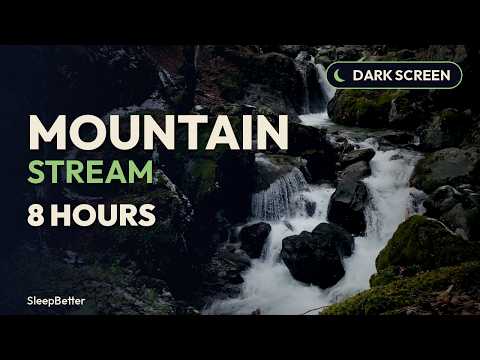 Video · 8 hours
Mossy mountain stream, 8 hours
Close water babble over mossy stones, with a distant breeze. 8 hours.
 Video · 45 minutes
Airplane white noise, a 45-minute night flight
A window over moonlit clouds and the steady roar of a jet cabin. 45 minutes.
 Short
Mountain stream sounds to fall asleep to
Clear water over mossy rocks in a dark forest. Just the stream, nothing else.
SoundWhite noise for sleep
The bright, even hiss that covers voices best. How to set it up so it isn't harsh.
Free toolSleep calculator
Pick a wake-up time and get bedtimes that line up with roughly 90-minute sleep cycles, or work forward from tonight.
Sleep videos and guided relaxation are for general wellness, not medical advice. If poor sleep is affecting your days, talk to a doctor or a sleep specialist.