
Airplane white noise for a quick nap, a 15-minute night flight
A quarter of an hour by the window on a calm overnight flight: moonlit cloud below, a softly blinking wing light and the smooth, even roar of the cabin. No announcements, no chimes, no turbulence, and it fades out gently at the end.
Watch on YouTube · SleepBetter channel · Nature & Night Sky
Made with AI. Parts of this video are AI-generated (see “How this was made” below).
What it is
The shortest flight in our night flight set: the same window seat, moon and sea of cloud as the 30-minute and 45-minute versions. The sound is a jet at cruise, a broad, airy rush over a low engine hum and a brown-noise floor. The chapters are night flight above the clouds (0:00), the screen begins to dim (3:00), dark screen with the sound carrying on (10:00) and a gentle fade-out from 14:00, so it never stops dead.
How to use it
Fifteen minutes is for a quick rest rather than a full nap: a reset after lunch, a pause between meetings, or closing your eyes before an evening out. Lie back, start it, and let the cabin sound cover the room around you. Set a separate alarm if you need to be up at a certain time; the fade-out is a soft cue, not a reliable alarm. The nap calculator helps you choose a length for the time you have.
Start at a lower volume than feels natural and let your ears settle; our safe volume guide has easy checks. The picture dims between 3:00 and 10:00, so it is fine on a TV or laptop.
Which length to pick
Pick this quarter hour for a short reset. The 30-minute flight suits a classic nap, the 45-minute and 1-hour flights give you more time, and the 8-hour night flight keeps the cabin going until morning. For a twenty-second taste, see the night flight cabin hum Short. If you prefer rain for a short rest, the Cozy Naps lighthouse bunk runs twenty minutes with a gentle wake-up.
Best for
Short breaks, people who always nod off on planes, and anyone who likes white or brown noise but finds it flat. A steady rush like this blurs voices, traffic and a neighbour’s TV; our white noise guide explains how masking works.
Sound design note
This is not a recording from a real flight. SleepBetter’s own sound engine shapes broadband noise into the rush of cabin air, adds a faint low engine hum and keeps the level steady over a brown-noise floor. There are no samples and no loops, so nothing repeats in a pattern you can learn, and every chime, announcement and bump is left out on purpose.
How this was made
This video’s picture is AI-generated: an AI still image of the window view, gently animated with an AI video model, with slow moving light and a softly blinking wing light added by SleepBetter, looped seamlessly and colour-graded. Audio: jet cabin roar, low engine hum and a brown-noise floor generated by SleepBetter’s own sound engine (no samples, no loops). No voice.
Questions
How is this different from the longer night flights?
Same cabin and same sound, just shorter: the fade-out starts at 14:00 instead of 29:00, 44:00 or 59:00.
Are there announcements or seatbelt chimes?
No. It is only the steady sound of the cabin, with no chimes, announcements or turbulence.
When does the screen go dark?
The picture starts to dim at 3:00 and is near-black from 10:00. The sound fades out gently from 14:00.
Keep watching
 Video · 8 hours
Mossy mountain stream, 8 hours
Close water babble over mossy stones, with a distant breeze. 8 hours.
 Video · 30 minutes
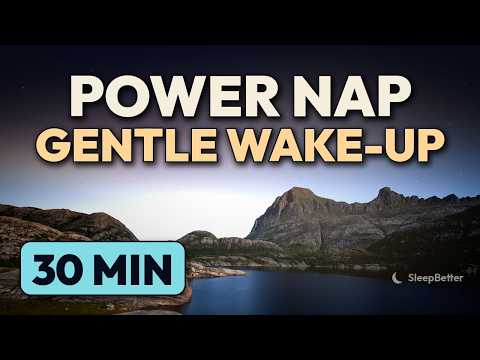
30 minute power nap with a gentle wake-up chime
Calm lake ambience for a short nap, then soft chimes and light to wake you.
 Video · 45 minutes
Airplane white noise, a 45-minute night flight
A window over moonlit clouds and the steady roar of a jet cabin. 45 minutes.
SoundWhite noise for sleep
The bright, even hiss that covers voices best. How to set it up so it isn't harsh.
Free toolNap calculator
Choose a 10, 20, 30 or 90 minute nap and get the exact time to set your alarm, with what the nap research found.
Sleep videos and guided relaxation are for general wellness, not medical advice. If poor sleep is affecting your days, talk to a doctor or a sleep specialist.