
Delta waves and whispering pine forest wind, 3 hours
A moonlit pine forest at night, the wind rising and settling through the treetops. Underneath, a low 2 Hz binaural tone sits with a soft brown-noise floor. There is no music and no voice. Between 3:00 and 10:00 the forest dims to a soft, low glow and stays there.
Watch on YouTube · SleepBetter channel · Nature & Night Sky
Made with AI. Parts of this video are AI-generated (see “How this was made” below).
Headphones needed. The binaural part works only with headphones: a binaural beat only exists when each ear gets its own tone. On a speaker you will just hear a soft hum. Keep the volume low, and don’t listen while driving.
What it is
Three hours of forest wind with a slow binaural layer underneath. The wind moves in long gusts through the pines, never sharp, with a low brown-noise floor so the quiet moments still feel full. The beat is 2 Hz: a 200 Hz tone in the left ear and 202 Hz in the right. 2 Hz sits in the range scientists call delta, but we use it as a soft, slow sound to rest attention on, not as a way to change your brain state: research on binaural beats is mixed. The picture begins to dim at 3:00 and is a low glow from 10:00. Chapters mark those points, and at 2:59:00 the sound eases out instead of stopping dead.
How to use it for sleep
Put comfortable headphones on, set the volume low and leave it running as you get into bed. On a speaker you will hear the wind and a soft hum, not the beat; that is still a calm forest sound if you prefer not to wear headphones. Keep it loud enough to blur a fridge or distant traffic and no louder; our safe volume guide has easy ways to check. If your phone stops YouTube when it locks, see how to play sleep sounds all night with the screen off.
How it differs from our other delta videos
Our 3 Hz delta breathing light is more musical: a soft pad, brown noise that swells like breath, and a one-minute light to breathe with, on a dim abstract screen. This one is a place instead, a pine forest, with only wind, a brown-noise floor and a slightly slower 2 Hz tone. For a whole night of music that changes with the stages of sleep, try the breathing square or the glowing hexagon. Our binaural beats guide explains what the studies do and do not say.
Best for
People who like wind more than rain, nights when you want a dark forest to look at for a few minutes, and anyone who finds a bare binaural tone easier to settle into when it sits under a real-feeling scene. Three hours also suits a long nap or the first half of the night on a sleep timer.
Sound design note
The wind, the brown-noise floor and the two tones are generated by SleepBetter’s own sound engine, with no samples. Because the sound is generated for the full length rather than looped, there is no short repeat to notice at 2 AM. Headphones needed for the binaural part: a binaural beat only exists when each ear gets its own tone. On a speaker you will just hear a soft hum. Keep the volume low, and don’t listen while driving.
How this was made
The forest image is an AI-generated still by SleepBetter, animated with AI image-to-video (Higgsfield, Kling), then looped and colour-graded. The wind, a low brown-noise floor and the binaural tones (200 Hz left, 202 Hz right) are generated procedurally by SleepBetter. No voice.
Questions
Do I need headphones?
For the 2 Hz binaural beat, yes: each ear needs its own tone. The wind and brown-noise floor still play on a speaker.
Will 2 Hz delta waves give me deeper sleep?
We do not claim that. Research on binaural beats is mixed. Treat it as a calm, slow sound to fall asleep to.
When does the screen go dark?
The forest starts to dim at 3:00 and is a soft, low glow from 10:00 until the end, while the wind and tone keep playing.
Keep watching
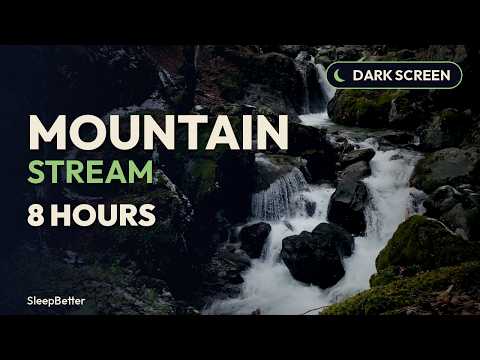 Video · 8 hours
Mossy mountain stream, 8 hours
Close water babble over mossy stones, with a distant breeze. 8 hours.
 Video · 45 minutes
Airplane white noise, a 45-minute night flight
A window over moonlit clouds and the steady roar of a jet cabin. 45 minutes.
 Short
Mountain stream sounds to fall asleep to
Clear water over mossy rocks in a dark forest. Just the stream, nothing else.
SoundBinaural beats for sleep
A real hearing effect with mixed evidence. How they work and how to try them.
Free toolSleep calculator
Pick a wake-up time and get bedtimes that line up with roughly 90-minute sleep cycles, or work forward from tonight.
Sleep videos and guided relaxation are for general wellness, not medical advice. If poor sleep is affecting your days, talk to a doctor or a sleep specialist.